Stress-Free Workplaces: How Office Design Influences Mental Health and Focus
30-04-2025 | 5m read

2. The Science Behind Space and the Mind
3. Natural Light and Visual Comfort
4. Acoustic Balance: Designing for Quiet and Collaboration
5. Biophilic Design: Bringing Nature Indoors
6. Spatial Layout and Cognitive Flow
7. Color Psychology and Emotional Balance
8. Ergonomics and Physical Comfort
9. Conclusion: Designing for the Mind Is Designing for the Future
Modern workspaces are no longer just places to sit and work—they are environments that directly influence how people think, feel, and perform. As burnout, anxiety, and attention fatigue become common workplace challenges, organizations are beginning to recognize a powerful truth: office design has a measurable impact on mental health and focus.
At Morpho Dimensions, we believe that thoughtful spatial design can reduce stress, improve clarity, and foster creativity. By aligning architecture, interiors, and human psychology, workplaces can evolve into environments that actively support well-being rather than silently drain it.
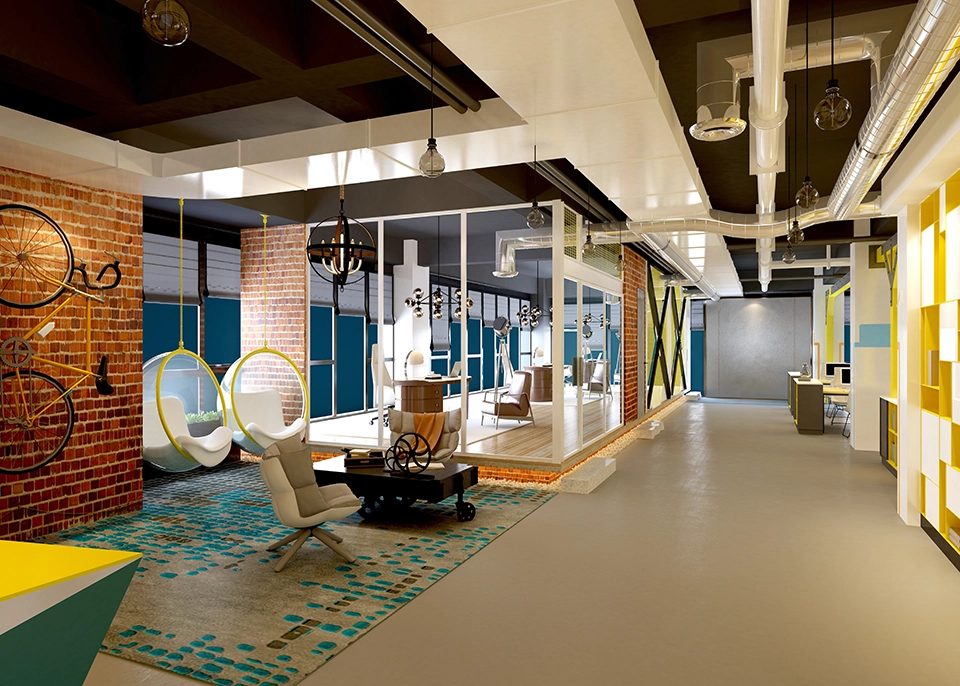
Environmental psychology shows that humans constantly respond—often subconsciously—to their surroundings. Lighting, acoustics, layout, color, and material choices all affect cortisol levels, attention span, and emotional balance.
Poorly designed offices often lead to:
Sensory overload
Constant distractions
Mental fatigue
Reduced productivity
Higher stress and absenteeism
In contrast, well-designed spaces can:
Improve focus and memory
Lower stress hormones
Support emotional regulation
Encourage collaboration without chaos
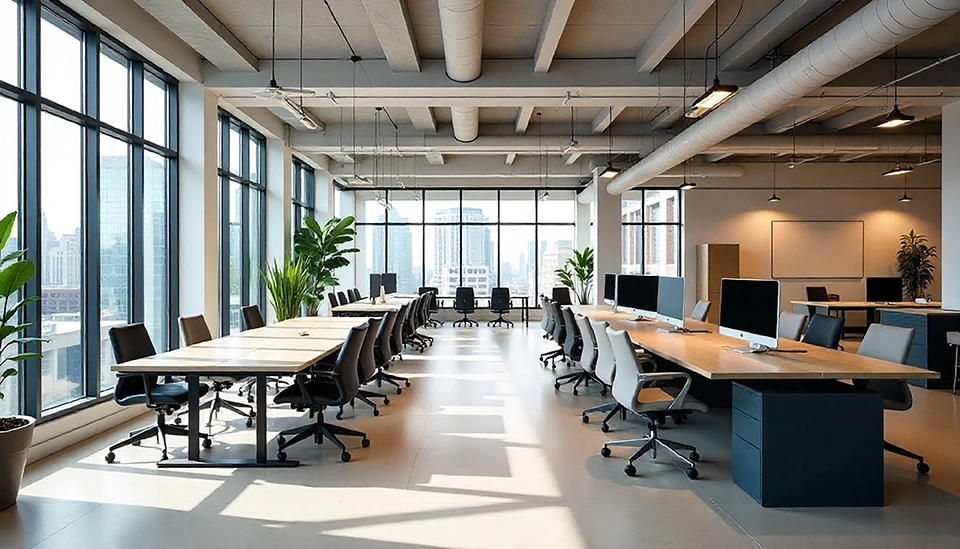
Access to daylight is one of the strongest predictors of workplace well-being.
Benefits:
Regulates circadian rhythms
Reduces eye strain and headaches
Improves mood and energy levels
Design Approach by Morpho Dimensions:
We prioritize open layouts, strategic window placement, glass partitions, and light-reflective surfaces to maximize daylight while controlling glare.
Noise is one of the biggest contributors to workplace stress.
Common issues:
Open offices with no sound control
Constant interruptions
Lack of private zones
Smart acoustic design includes:
Sound-absorbing panels and ceilings
Zoned layouts (quiet, collaborative, social)
Enclosed focus rooms and phone booths
At Morpho Dimensions, acoustic planning is integrated early in the design process—not added as an afterthought.
Humans are biologically wired to respond positively to nature. Biophilic design reconnects people with natural elements inside built environments.
Key biophilic elements:
Indoor plants and green walls
Natural materials like wood and stone
Organic forms and textures
Views of outdoor landscapes
Impact on mental health:
Reduced stress and anxiety
Improved concentration
Increased creativity and well-being
Cluttered, confusing layouts increase mental load. Intuitive spatial planning allows the brain to work more efficiently.
Effective layouts support:
Clear circulation paths
Easy wayfinding
Logical adjacencies between teams
Smooth transitions between work modes
Morpho Dimensions designs workplaces that flow naturally, reducing cognitive friction and helping employees stay mentally present.

Color influences mood more than we realize.
Design insights:
Blues and greens promote calm and focus
Earth tones create grounding and comfort
Muted palettes reduce overstimulation
Strategic accent colors energize without overwhelming
Rather than following trends, Morpho Dimensions selects color palettes aligned with brand identity and psychological impact.
Mental stress often begins as physical discomfort.
Key ergonomic considerations:
Adjustable seating and desks
Proper posture support
Flexible workstations
Movement-friendly layouts
Comfortable bodies support focused minds.
One of the biggest stressors in offices is lack of control.
Modern employees need:
Quiet zones for deep work
Collaborative spaces for teamwork
Informal areas for mental breaks
Freedom to choose where and how they work
Morpho Dimensions creates adaptive environments that respect individual working styles while supporting organizational goals.
As work continues to evolve, so must the spaces that support it. Stress-free workplaces don’t happen by chance—they are intentionally designed.
By prioritizing mental health and focus through thoughtful office design, organizations can create environments where people don’t just work—but thrive.
Morpho Dimensions is committed to shaping workplaces that support clarity, calm, and creativity—one dimension at a time.
Conference rooms are no longer just enclosed boxes with long tables and static screens. In the era of hybrid teams,...
Conference rooms are no longer just enclosed boxes with long tables and static screens. In the era of hybrid teams,...
Conference rooms are no longer just enclosed boxes with long tables and static screens. In the era of hybrid teams,...
Conference rooms are no longer just enclosed boxes with long tables and static screens. In the era of hybrid teams,...
Conference rooms are no longer just enclosed boxes with long tables and static screens. In the era of hybrid teams,...
Conference rooms are no longer just enclosed boxes with long tables and static screens. In the era of hybrid teams,...