Designing for Hybrid Work: Creating Flexible, Collaborative Environments
30-04-2025 | 5m read
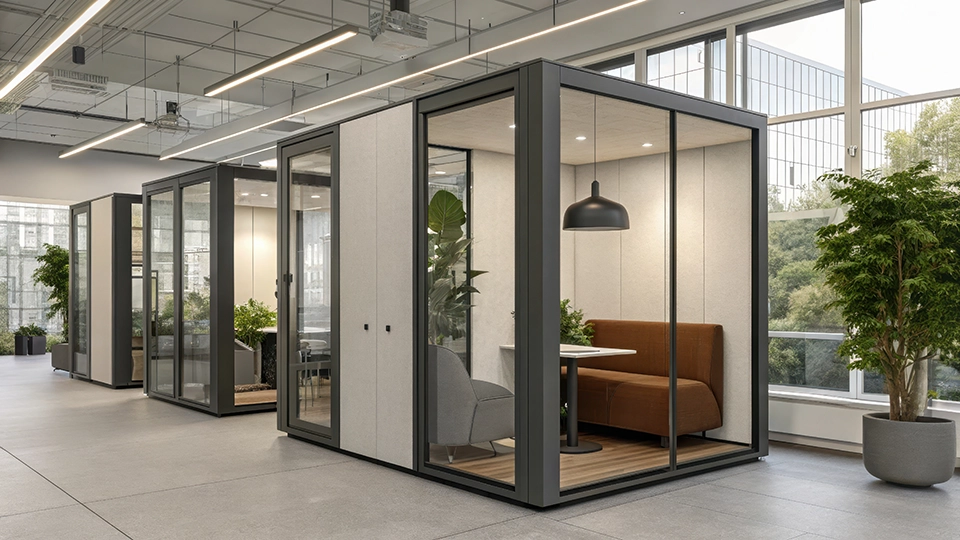

The modern workplace has evolved dramatically. As remote work and in-office collaboration merge, the hybrid work model has become the new standard for many organizations. But creating a space that supports both flexibility and connection requires more than just rearranging desks.
At Morpho Dimensions, we believe hybrid workspaces should empower teams to choose how and where they work best—without sacrificing productivity or culture. Let’s explore what makes hybrid office design successful, and how your business can benefit from a flexible, future-ready workspace.
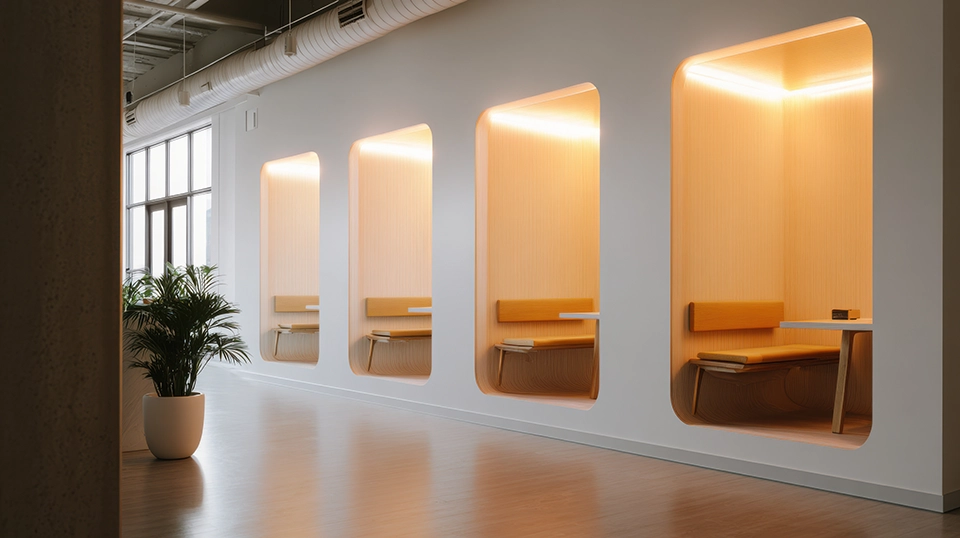
A hybrid workplace blends in-office and remote work to offer employees the best of both worlds. Some team members may work from the office part of the week, while others join virtually.
The goal is to create an environment where collaboration, focus, and connection can all thrive—regardless of physical location.
Hybrid offices must adapt to changing team sizes, work schedules, and project needs.
Use modular furniture that can be rearranged for different purposes.
Include multi-use zones for both group meetings and individual focus time.
Technology is the backbone of hybrid work.
Equip rooms with video conferencing tools, acoustic solutions, and strong Wi-Fi coverage.
Integrate smart boards, shared screens, and cloud-based collaboration systems.
Design for both in-person and remote participants.
Set up equal access meeting experiences with well-placed cameras and microphones.
Encourage team equity through digital collaboration zones and virtual coworking areas.
Support mental and physical health through thoughtful space planning.
Incorporate natural light, ergonomic furniture, and biophilic elements.
Create quiet zones or wellness rooms for relaxation and focus.
Employees can choose the environment that best suits their tasks—whether that’s home for focus or the office for collaboration.
Flexible work models empower employees, improving work-life balance and reducing burnout.
Hybrid work allows companies to downsize or redesign underused office areas for more dynamic purposes.
Thoughtfully designed offices become collaboration hubs, where people connect, share ideas, and reinforce a shared mission.

At Morpho Dimensions, we approach hybrid workspace design through a balance of functionality, aesthetics, and human experience.
Our key design strategies include:
Modular Design: Adaptable layouts for evolving team needs.
Smart Integration: Technology-enhanced meeting and collaboration tools.
Wellness-Centered Planning: Natural light, air quality, and comfort-focused design.
Sustainability: Eco-conscious materials and energy-efficient systems.
Cultural Alignment: Spaces that reflect brand identity and employee values.
Consider a company shifting from traditional office setups to a hybrid model. Instead of dedicated desks, Morpho Dimensions designs a system of “activity-based zones”—where employees choose spaces depending on the task at hand.
For instance:
A designer collaborates in an open studio in the morning.
Then moves to a private pod for focused design work in the afternoon.
The team later gathers in a hybrid-enabled meeting room to share progress with remote members.
This flexibility enhances creativity and supports diverse working styles—hallmarks of an effective hybrid office.
The future of work is hybrid—and the future of design is flexible.
Creating an environment that supports both digital and physical collaboration empowers teams to perform their best.
At Morpho Dimensions, we design adaptive spaces that inspire productivity, innovation, and human connection—no matter where your team works from.
👉 Ready to transform your office for hybrid work?
Let Morpho Dimensions help you design a space that fits your team’s new way of working.
Visit: www.morphodimensions.com
Conference rooms are no longer just enclosed boxes with long tables and static screens. In the era of hybrid teams,...
Conference rooms are no longer just enclosed boxes with long tables and static screens. In the era of hybrid teams,...
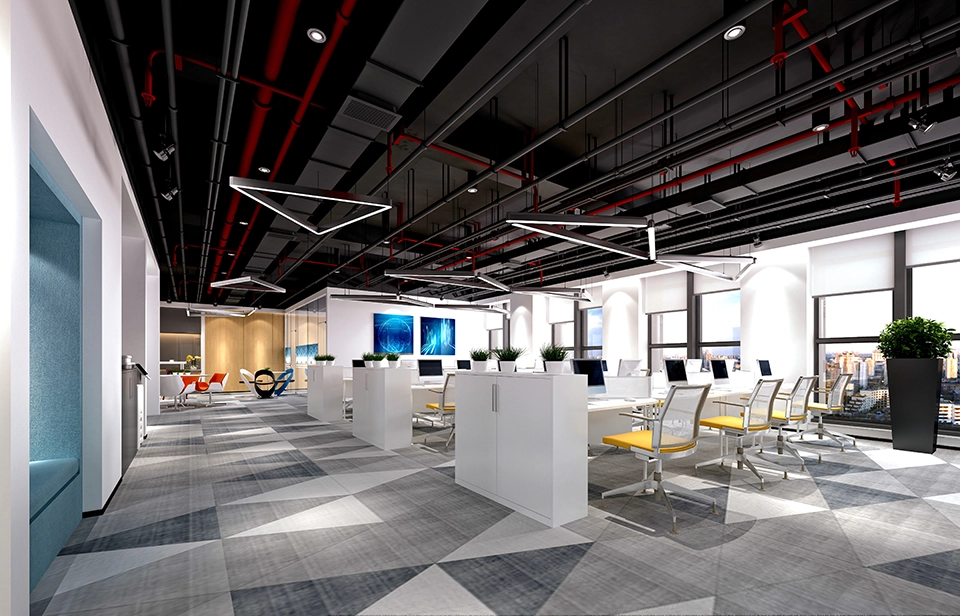
Conference rooms are no longer just enclosed boxes with long tables and static screens. In the era of hybrid teams,...
Conference rooms are no longer just enclosed boxes with long tables and static screens. In the era of hybrid teams,...
Conference rooms are no longer just enclosed boxes with long tables and static screens. In the era of hybrid teams,...
Conference rooms are no longer just enclosed boxes with long tables and static screens. In the era of hybrid teams,...